
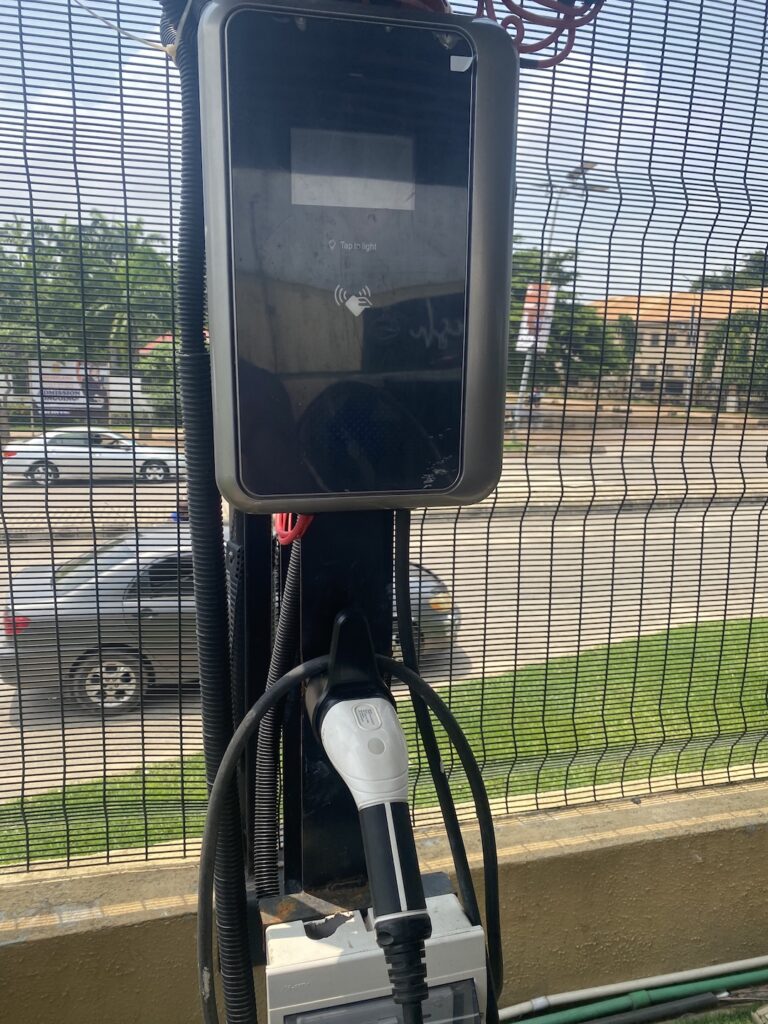
There is a lot of enthusiasm about electric vehicles in Nigeria and not much published data. Here is what can actually be cited, and what it means if you are thinking about buying one in Abuja.
Adoption is climbing
LUG West Africa, reported in The Guardian Nigeria in January 2026, put the rise in electric vehicle adoption in Nigeria at roughly 400% between 2020 and 2025. Electric vehicles still represent well under two per cent of the national fleet, so a large percentage increase is coming off a very small base, but the direction is not in doubt.
Government activity supports it. Around 40 electric buses were deployed in Abuja in December 2025, and import duty on fully built electric vehicles sits at 10% with components exempted.
Public charging is not keeping pace
As of August 2025, EV24 Africa counted roughly 12 public charging and battery-swap sites in the whole of Nigeria, together with about five after-sales service facilities. Most of those sites are in Lagos and Abuja.
For scale: that is roughly one public charging location for every 15 million people. Announcements of larger networks exist, including 250 or more solar-powered charging points planned for Lagos, but planned is not installed.
The grid is the background constraint
National generation typically runs at 4,000 to 4,500MW against demand estimated many times higher, with transmission losses commonly reported in the 40% range and grid access reaching a little over half the population.
A single electric car uses roughly 3 to 7kWh a day, which we priced out against petrol in what it costs to charge an electric car in Abuja. That is small individually and significant collectively, which is exactly why the constraint on an Abuja estate is usually the shared transformer rather than the national grid.
What this means in practice
Your car will be charged where it sleeps. With a dozen public sites nationally, home and workplace charging is not a convenience in Nigeria. It is the entire refuelling strategy.
A portable charger is not optional if you travel. Outside Lagos and Abuja you are relying on whatever outlet you can reach at your destination.
Estates need to plan, not react. Where several residents on one transformer buy electric cars in the same year, a load-managed shared design is far cheaper and far safer than several independent installations competing for the same headroom.
Commercial charging is a genuine differentiator. A working bay at a hotel, mall or office in Abuja is currently unusual enough to be a reason someone chooses you. We install them across every district of the FCT.
Sources: EV24 Africa, August 2025 and 2026. LUG West Africa, reported in The Guardian Nigeria, January 2026.
Thinking about a charger, or worried about the one you have?
We are on site for inspection and evaluation within 6 hours anywhere in Abuja. You get a written quote with the full installation cost broken down line by line, and once it is agreed and paid we begin work immediately.