
Commercial and Public EV Charging Station Installation in Abuja
Nigeria had roughly a dozen public charging and battery-swap sites in mid-2025. In a city where EV ownership is growing but charging is scarce, a working charger in your car park is a genuine reason for someone to choose your hotel, your mall or your office over the one down the road.
Offices, hotels, malls, estates, filling stations and fleet yards. On site for inspection within 6 hours, anywhere in the FCT.
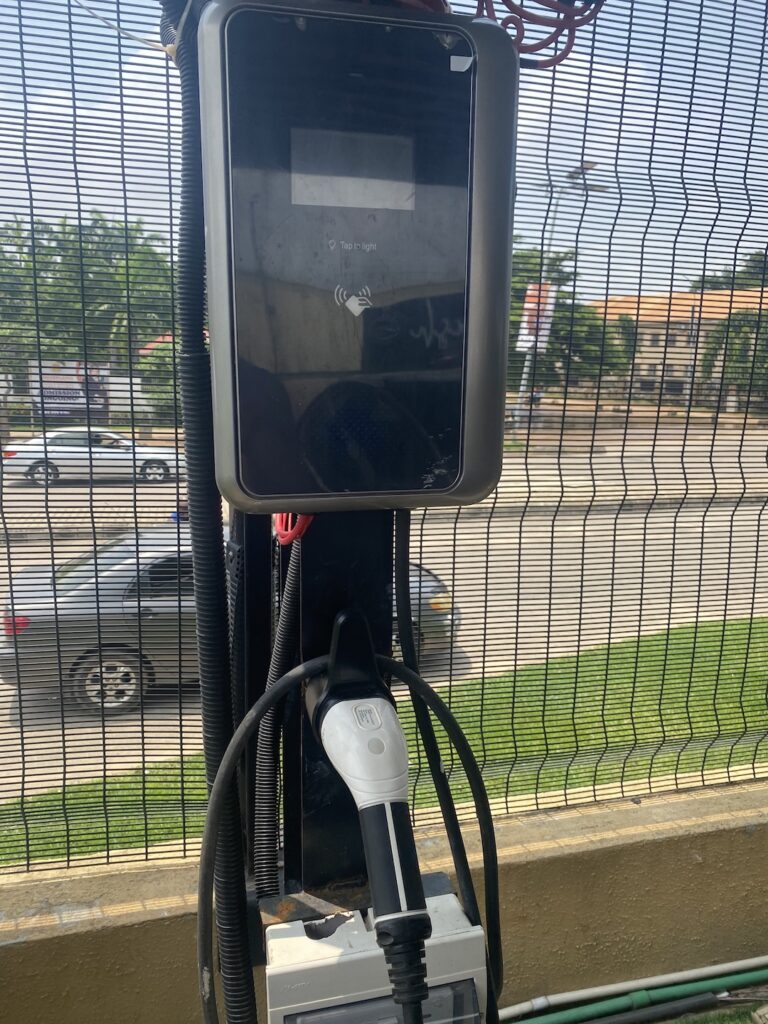
Who we build these for
Six site types, six different designs. What they share is that the electrical design comes first and the charger catalogue comes second.
Offices and business parks. Staff and visitor bays, usually 7.4kW or 22kW AC, with load management so the building supply is never the thing that fails.
Hotels and serviced apartments. A charging bay is a booking reason and a stay-longer reason. Guests want to arrive on 20% and leave full, which is an overnight AC job rather than a rapid-charger job.
Malls and restaurants. Dwell time is one to three hours, so higher-power AC or a modest DC unit fits the visit rather than the vehicle.
Estates and residential developments. Shared parking, shared transformer, several owners. This is a load-management problem before it is a charger problem, and we treat it that way.
Filling stations and public sites. Pedestal units, public-facing access control, metering, and equipment that survives being used by strangers.
Fleet and logistics yards. Depot charging where the whole fleet has the same window overnight, which is exactly where naive designs trip the incoming supply.
AC or DC, and how many bays
The honest answer usually surprises people: most commercial sites in Abuja need fewer, slower chargers than they first ask for.
AC charging (7.4kW to 22kW) suits anywhere a car sits for more than an hour: offices, hotels, estates, apartment parking, staff bays. It is far cheaper per bay, far easier on the supply, and it is what almost every EV in this market can accept.
DC rapid charging (50kW and up) suits filling stations, highway stops and public sites where the visit is 20 to 40 minutes. It costs several times more per bay, it needs serious supply capacity, and it needs a real answer to what happens when the grid drops mid-session.
A common and expensive mistake is buying DC for a site where every car stays three hours. You pay for speed nobody uses, and you load the transformer for no commercial return.
Load management is what makes multiple bays possible. Six 7.4kW chargers is 44kW if they all pull at once. Dynamic load management measures the site’s actual draw and shares whatever headroom is left between active chargers, so the incoming supply is never exceeded and you do not have to pay for a supply upgrade you only need for one hour a night.
Start smaller than you think, and cable for more. The cheap moment to install ducting and spare cable capacity is while the car park is already dug up. Adding bays later into prepared ducts is a fraction of the cost of doing the civils twice.
What a commercial installation involves
More of this work is civil and electrical than most people expect. The charger is often the smallest line on the quote, which is why we break every line out for you.
- Load study of the incoming supply, existing demand and transformer headroom
- Charger specification: AC or DC, power per bay, number of bays and future expansion
- Dynamic load management so total draw is capped below the site limit
- Sub-metering, so you know what the chargers cost you and can bill users if you want to
- Access control: RFID, app, PIN or open, depending on whether the bays are public
- Civils: trenching, ducting, bollards or wheel stops, bay marking and signage
- Weather and dust protection, surge protection, and lightning consideration on exposed sites
- Commissioning, staff handover, and a maintenance schedule rather than a one-off install
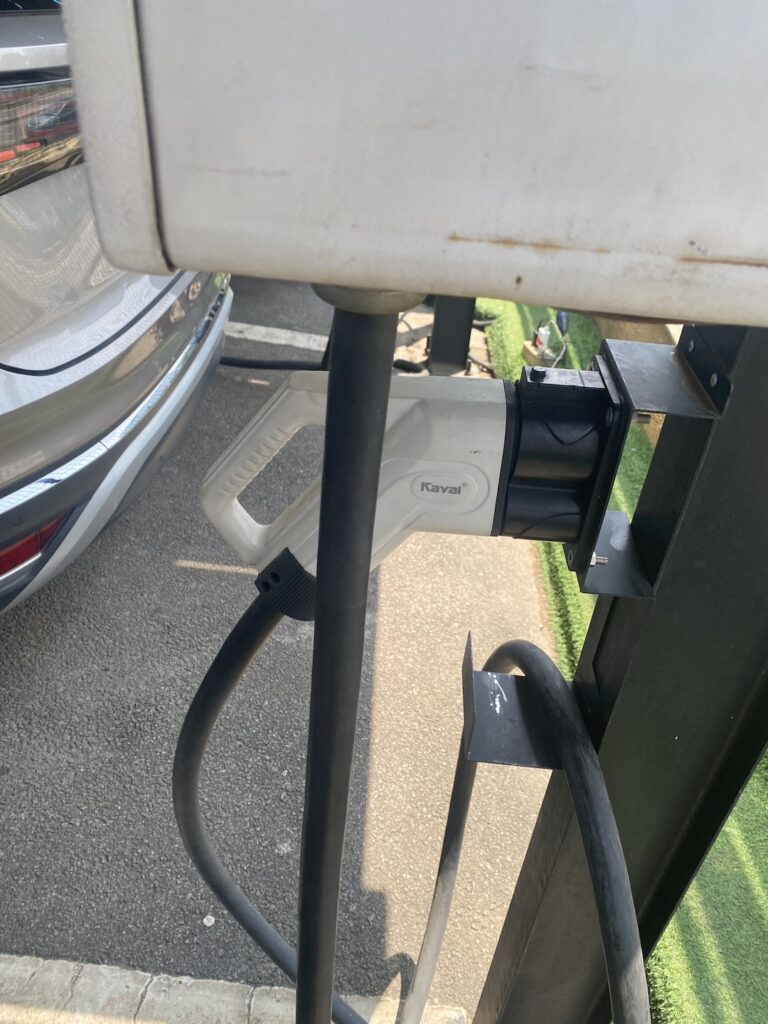
The commercial case, in public numbers
We do not have proprietary demand data for Abuja and we will not invent any. These are published figures that shape the decision.
12
Public charging and battery-swap sites in all of Nigeria, mid-2025
EV24 Africa, August 2025
400%
Rise in EV adoption in Nigeria, 2020 to 2025
LUG West Africa, in The Guardian Nigeria, January 2026
40
Electric buses deployed in Abuja, December 2025
EV24 Africa
N3,277
Average price of a litre of diesel, May 2026
National Bureau of Statistics

Supply
Grid reality, and what we do about it
Nigeria generates roughly 4,000 to 4,500MW against an estimated national demand many times that, with transmission losses commonly reported in the 40% range. In practice a commercial charging site in Abuja has to answer three questions honestly.
What happens during an outage? Either the bays go offline, or they run from a generator or battery. Both are valid; they are just different budgets. What is not valid is a design that pretends outages will not happen.
What happens to the generator bill? Charging cars off diesel at N3,277 a litre is a business decision, not a default. We will show you the arithmetic before you commit to it.
What does the transformer say? On shared estate or plaza supplies, the transformer is usually the binding constraint. A load study is cheaper than a failed transformer.
What our customers say
Rated 5.0 out of 5 from 3 Google reviews. Read every one of them, unedited, on our Google Business Profile.
“Great service and fast response I will give you guys a 9/10.”
Finding the charger: very easy
Kekeboro Obarijima · Google review
“Had a smooth charging experience at this Abuja EV charger installation, very user friendly. The fast electric vehicle charging and reliable public EV power make it the best spot in the FCT. Will definitely be back.”
john mmoh · Google review
“Great service.”
HID ACADEMY · Google review
Commercial charging questions
Not covered here? Ask on the phone. It is quicker than guessing.
Fewer than most sites first ask for, cabled for more. Two to four AC bays covers early demand at most Abuja offices and hotels, and the ducting you lay now makes bay five to ten cheap later. We would rather you spend on civils and load management than on speed nobody uses.
Yes. Sub-metered chargers with RFID or app authentication let you bill per kWh or per session, or offer it free to guests and bill nobody. The decision affects which units we specify, so it is worth settling before we order.
Not with dynamic load management, which measures the site’s live draw and shares the remaining headroom between active chargers. Without it, six chargers pulling together is a straightforward path to tripping the main incomer.
Sometimes, and a load study tells you rather than a guess. In many cases load management removes the need entirely, because the peak the chargers would have created never happens.
A charging site can be designed to drop out cleanly, to switch to generator, or to ride through on battery. Each is a different cost. The important thing is that the changeover is arranged so the charger sees a clean supply with a proper neutral reference, or it will fault.
A two-bay AC installation on an existing supply with a short run can be a few days. Anything involving trenching, a load study, DC equipment, estate approvals or a supply application runs into weeks. We give you a programme, not a slogan.
Yes, and we recommend it. Public-facing equipment gets used by strangers, dust gets everywhere in harmattan, and connectors wear. A scheduled inspection is cheaper than an out-of-service bay and an angry guest.
Yes. We are often brought in for the charging design, protection and commissioning while an existing contractor handles the civils and containment. We will say clearly which parts we are certifying.
Commercial sites are quoted after a survey because the civils usually cost more than the chargers. Trenching, ducting, a separate metered supply, bollards and load management all move the figure, and so does the number of bays you cable for now versus use now. We survey, then send a written quote with each element priced separately.
Yes. Units with access control and metering let you bill by session or by kWh, and we specify those where the site intends to recover its costs. We will also tell you honestly when the traffic at your location does not yet justify the extra hardware.
Tell us about the site
Number of bays you have in mind, what the parking is used for, and roughly what your incoming supply is. That is enough for a first conversation about whether AC or DC is right and what the constraint will be.
On site for inspection within 6 hours, anywhere in the FCT. Open 24 hours, seven days a week.