
Home EV Charger Installation in Abuja
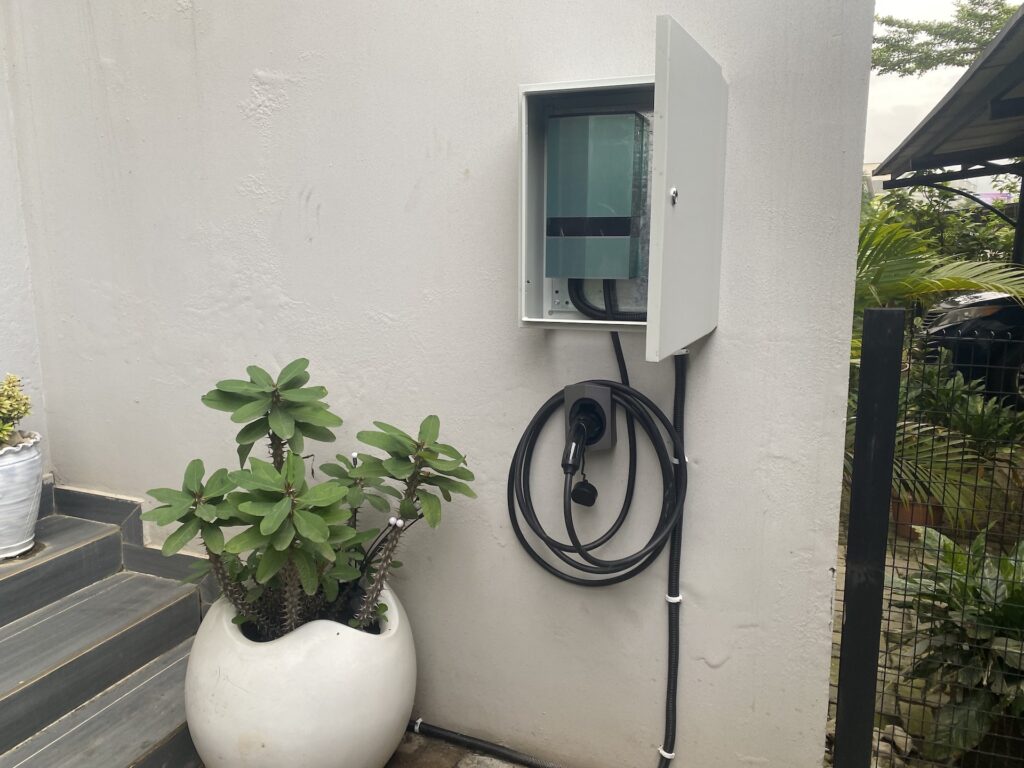
Your car sits at home longer than it sits anywhere else, and with roughly a dozen public charging sites in the whole of Nigeria, home is where almost every kilometre in an Abuja EV comes from. We fit 7kW and 22kW chargers on a dedicated circuit, test them properly, and charge your car with you watching before we leave.
Single-phase and three-phase installations across the FCT. Installation cost differs from job to job, so you get a quote with the full breakdown. Open 24 hours on 0706 727 6002.
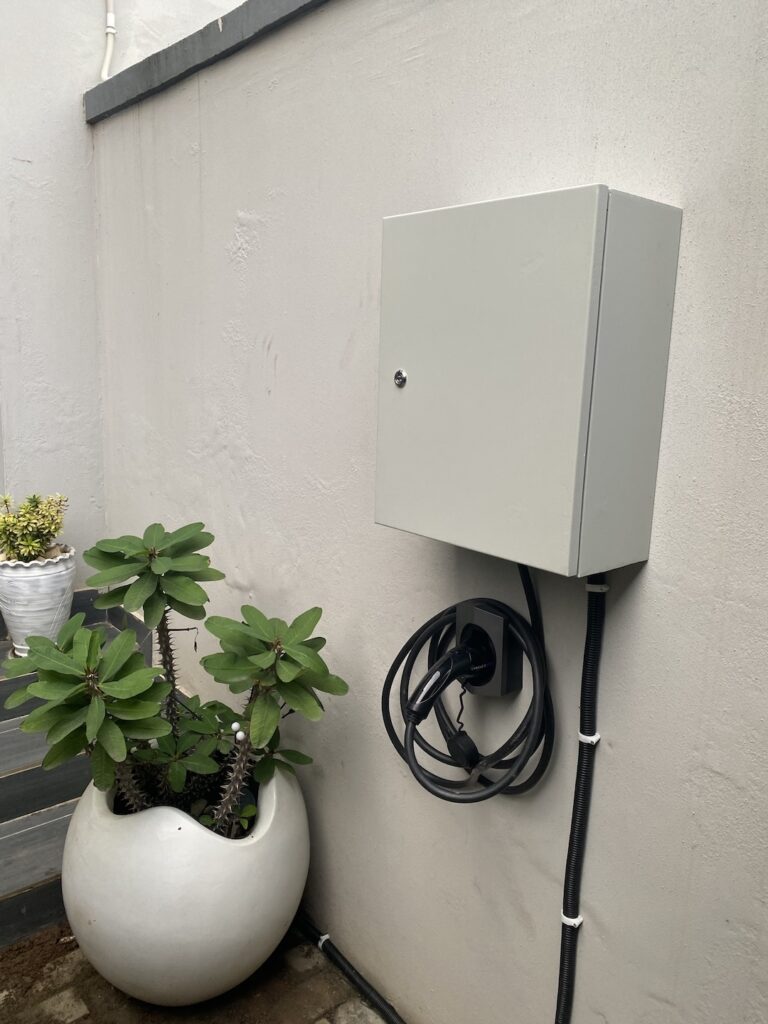
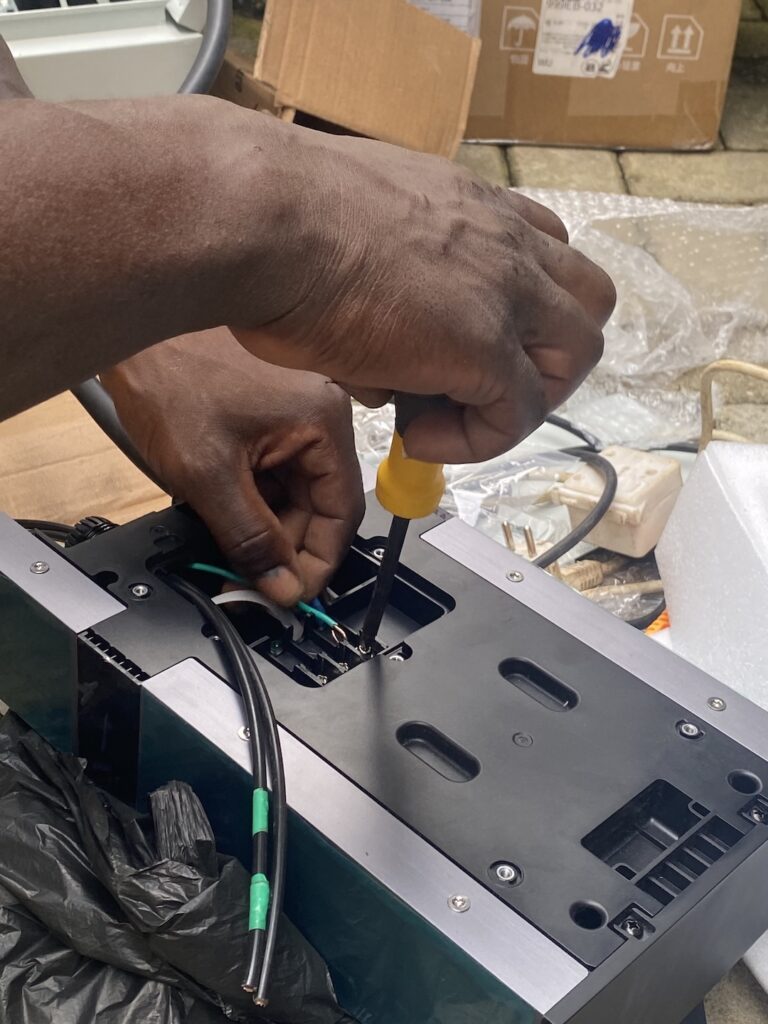
What a proper home installation includes
The charger is a box on a wall. What makes it safe, and what keeps it working, is everything behind it. Every home job we do includes all of this, and we give you the readings in writing.
- A dedicated circuit run from your distribution board, sized for the charger and the actual cable length
- An RCBO or Type B RCD, or a charger with 6mA DC fault detection built in, as IEC 61851-1 requires
- A driven earth rod where needed, with a measured earth loop impedance rather than an assumption
- Cable sized for the real run, so voltage drop stays inside limits on a 40 metre compound
- Mechanical protection on exposed runs, and genuine IP65 equipment anywhere outdoors
- Isolation and clear labelling at the board, so the next electrician knows what the circuit feeds
- Test results on paper: earth loop impedance, RCD trip time, insulation resistance and continuity
- A live charge test with your own car in your own compound before we hand over
7kW, 22kW, or the cable that came with the car?
This is the first real decision, and it is decided by your supply and your parking window, not by the price of the unit.
7.4kW on a single phase is the right answer for most Abuja homes. It fills a typical battery overnight, it does not need a new supply, and it sits comfortably on a 40A circuit. If your car is home from 8pm to 6am, this is enough.
22kW needs three-phase power. On a single-phase supply the ceiling is around 7.4kW no matter what the box on the wall claims. Where three phase exists we check the balance first, because hanging a charger off one phase makes an existing imbalance worse.
The portable cable is for travel, not for home. It draws close to the limit of a socket outlet for eight hours or more at a time, and socket outlets are not designed for that duty. Warm plugs and browned socket faces are what that looks like a few months in.
| How you charge | Typical power | Range added per hour | Time to fill a 60kWh battery |
|---|---|---|---|
| 13A wall socket with the cable from the boot | about 2.3kW | roughly 10km | more than a day |
| 16A single-phase charger | 3.7kW | roughly 20km | about 16 hours |
| 32A single-phase charger | 7.4kW | roughly 40km | about 8 hours |
| 32A three-phase charger | 22kW | roughly 120km | about 3 hours |
| DC rapid charger | 50kW and above | not applicable | 20 to 60 minutes to 80% |
Range figures assume roughly 0.18kWh per kilometre, which is typical for an electric saloon or compact SUV. Your car will differ, and no car charges at full power all the way to 100%.
Survey
What we check before we quote
Your incoming supply and spare capacity. There is no point specifying 7.4kW if the board cannot carry it alongside the air conditioners and the pump. We measure rather than assume.
Your tariff band. A Band A feeder committed to 20 hours or more a day makes overnight charging straightforward. On a lower band the supply window is short, and the honest answer may be a larger charger, a battery buffer, or both.
The earth. A great many Abuja properties have no driven electrode, or one installed years ago in laterite that has never been tested. An EV charger without a proven low-impedance earth is a shock risk the moment the supply neutral is lost.
The distance from board to car. Compounds here routinely put 25 to 60 metres between the two. At that length cable sizing stops being a formality.
Whether you have an inverter or generator, and what it can hold. A 5kVA inverter will not run a 7.4kW charger. If you want charging to survive an outage, the two have to be sized together.
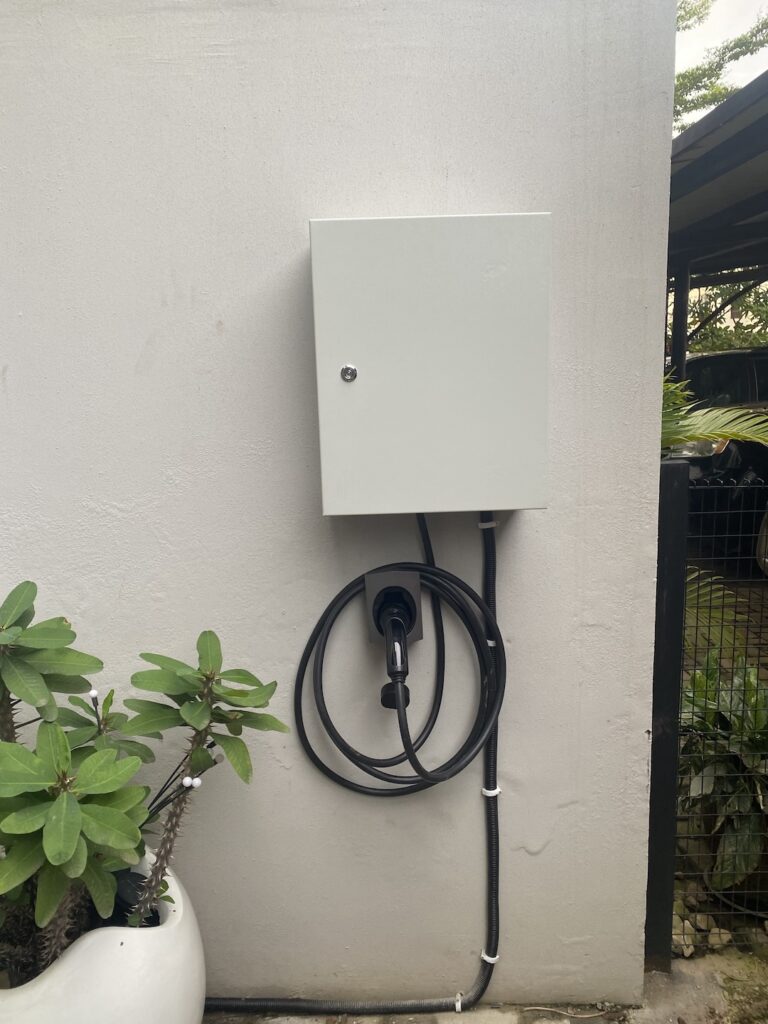
Why home charging is not optional here
These are the conditions any Abuja EV owner is buying into. They are the reason the charger on your wall matters more than it would in a country with a dense public network.
12
Public EV charging and battery-swap sites in all of Nigeria
EV24 Africa, August 2025
5
After-sales EV service facilities nationwide
EV24 Africa, August 2025
N1,596
Average price of a litre of petrol, May 2026
National Bureau of Statistics
N209.50
AEDC Band A tariff per kWh
NERC MYTO, from December 2025
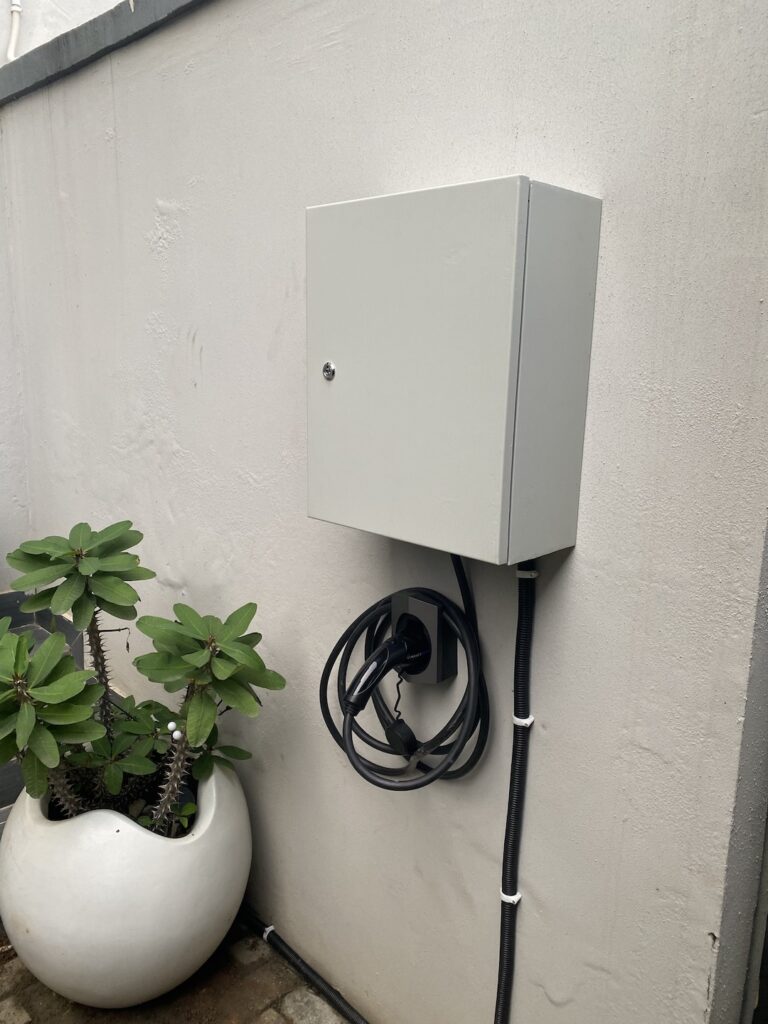
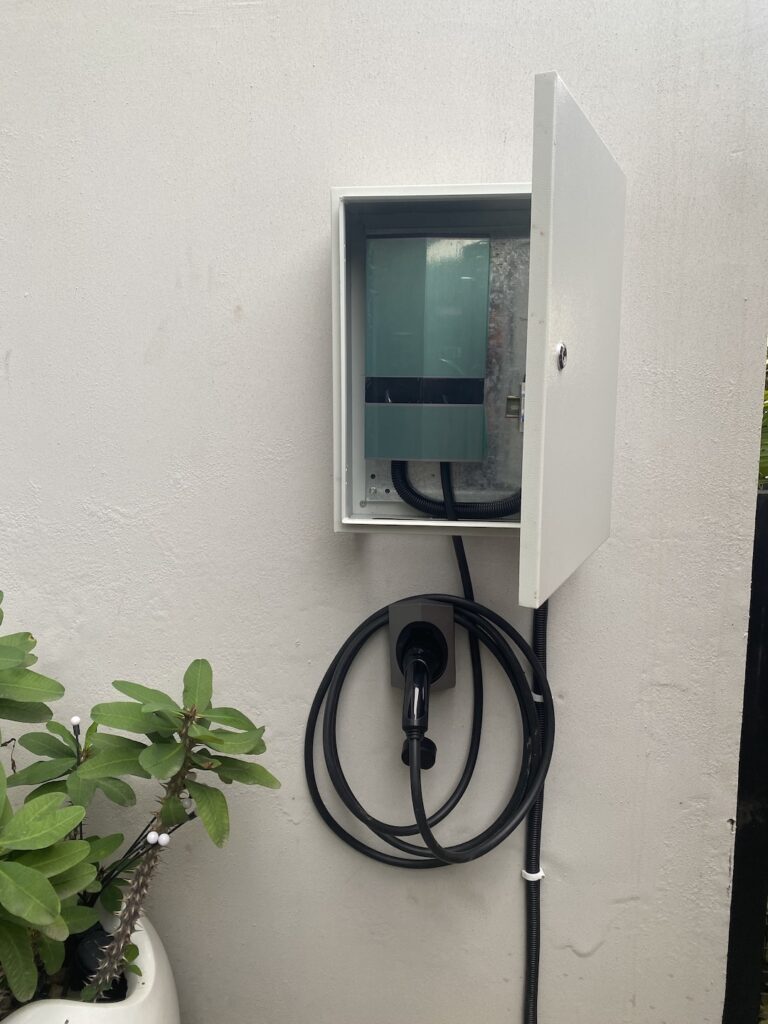
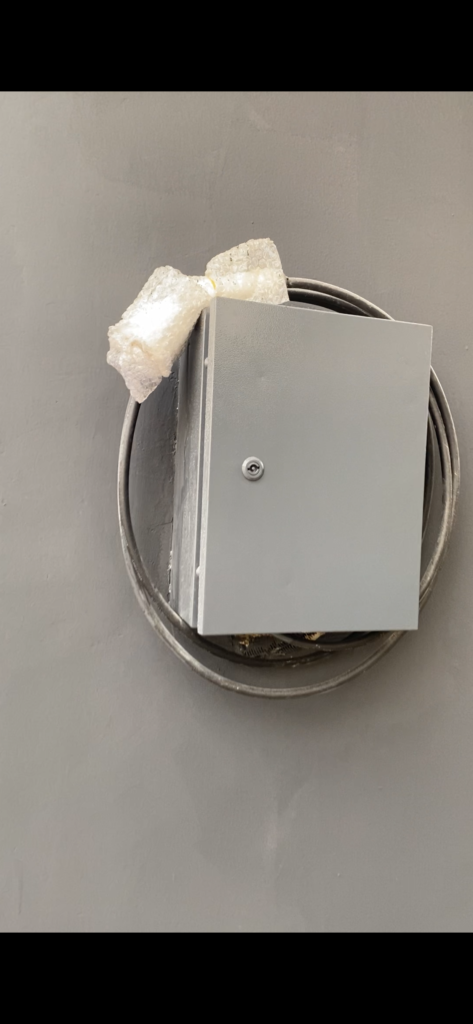
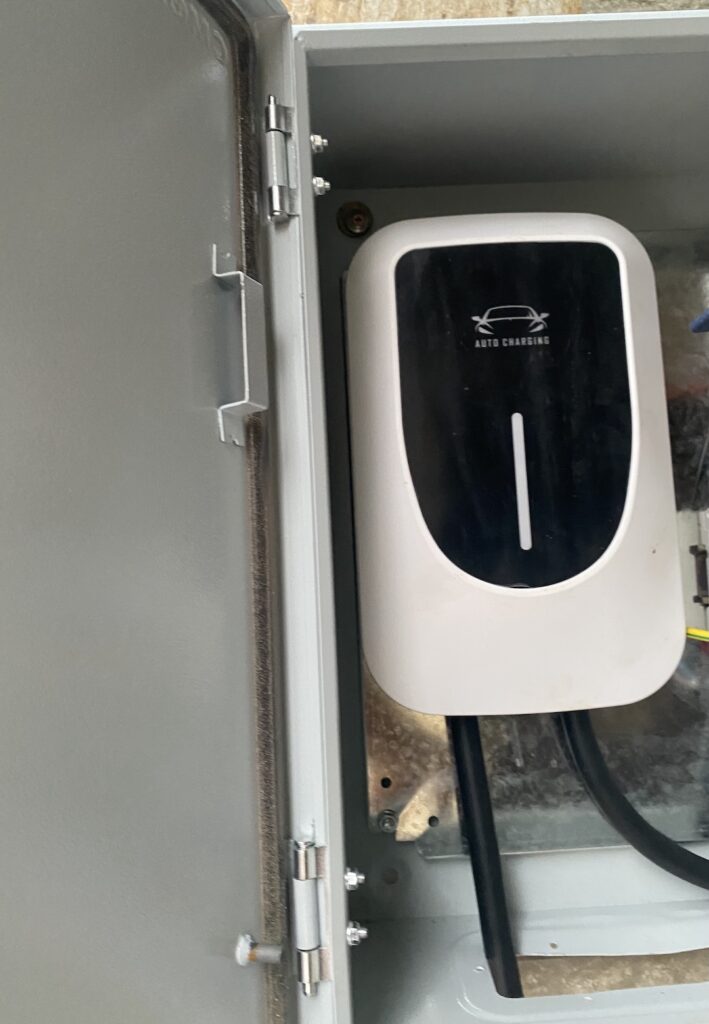
Home installations across the FCT
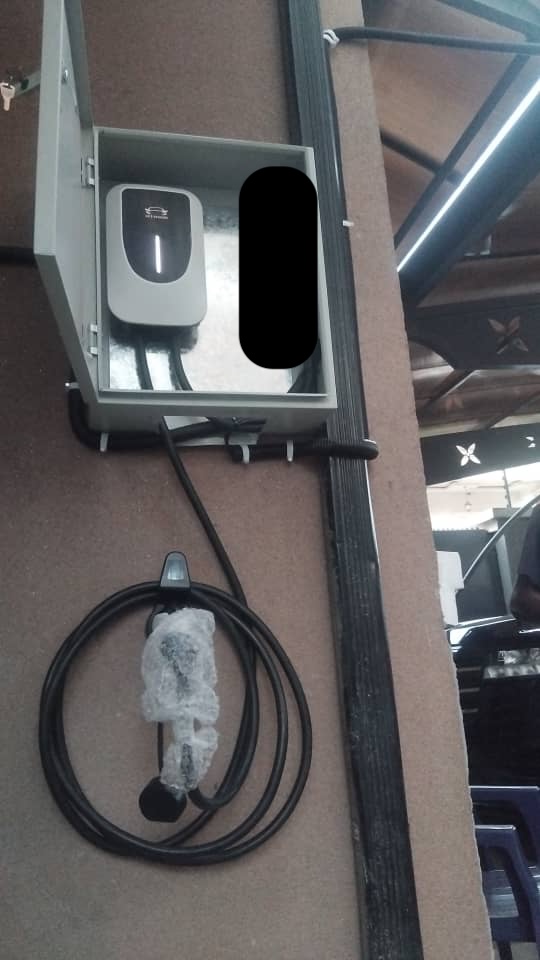
What our customers say
Rated 5.0 out of 5 from 3 Google reviews. Read every one of them, unedited, on our Google Business Profile.
“Great service and fast response I will give you guys a 9/10.”
Finding the charger: very easy
Kekeboro Obarijima · Google review
“Had a smooth charging experience at this Abuja EV charger installation, very user friendly. The fast electric vehicle charging and reliable public EV power make it the best spot in the FCT. Will definitely be back.”
john mmoh · Google review
“Great service.”
HID ACADEMY · Google review
Home charger questions
Not covered here? Ask on the phone. It is quicker than guessing.
Usually, with the landlord’s written consent, because the work becomes part of the building’s fixed installation. We can install in a way that is straightforward to remove later, and we will say so on the quote.
Often not. A 7.4kW charger on a healthy single-phase supply with spare capacity at the board does not require a supply upgrade. Where the existing load already fills the supply, we will tell you at survey rather than after the deposit.
A short run with an existing usable earth is typically a one-day job. Long compound runs, trenching, a new earth electrode, three-phase work or estate approvals add time. You get a realistic duration at the survey, not an optimistic one.
Close to where the car actually parks, on a wall that will take the fixing, out of direct afternoon sun where possible, and within a sensible cable run from the board. We walk the compound with you before deciding.
Yes. Nearly every EV sold into Nigeria uses a Type 2 connector for AC charging, which covers MG, BYD, GAC, Geely, Hyundai, Kia and most Teslas here. If your car needs a different connector or an adapter, we confirm it before ordering anything.
They can share it in turn, and some units support load sharing across two outlets. What matters is that the total draw stays inside your supply. Where two cars charge at once we design for the combined load rather than hoping the timing works out.
A charger that trips repeatedly is telling you something: a shared circuit, an earthing problem, a moisture path, or an incorrect protective device. It is a diagnostic job, not a reset job. We do that work, including on units other people installed.
Twelve months on our workmanship, plus whatever the manufacturer gives on the unit itself. We keep the test results, so if something changes later we have a baseline to compare against.
Level 2 is the term for AC charging above household socket speed, which in practice means 7.4kW on single phase or 11kW to 22kW on three phase. It is what almost every Abuja home should have. A 13A socket is Level 1 and adds only about 10km of range an hour, which is not enough for daily driving.
22kW needs a three-phase supply and a car whose onboard charger can accept it, and most cars sold into this market cannot. For a single-phase home, 7.4kW is the right answer: it adds roughly 40km of range an hour, so a normal overnight window fills almost any commute. We confirm your supply type on the site visit before recommending either.
Yes. A Tesla Wall Connector installs on the same kind of dedicated circuit as any other Type 2 unit. We size the cable for your run, fit its own breaker and DC fault protection, drive an earth electrode where the existing earth is not sound, and prove it charges with your car before we leave.
Send us a photo of your distribution board
That, your car model, and roughly how far the board is from where you park is usually enough for a sensible first answer on the phone. Installation cost differs from job to job, so the figure you get afterwards is a written quote with the full breakdown.
On site for inspection within 6 hours, anywhere in the FCT. Open 24 hours, seven days a week.