
Mobile and Portable EV Chargers in Abuja
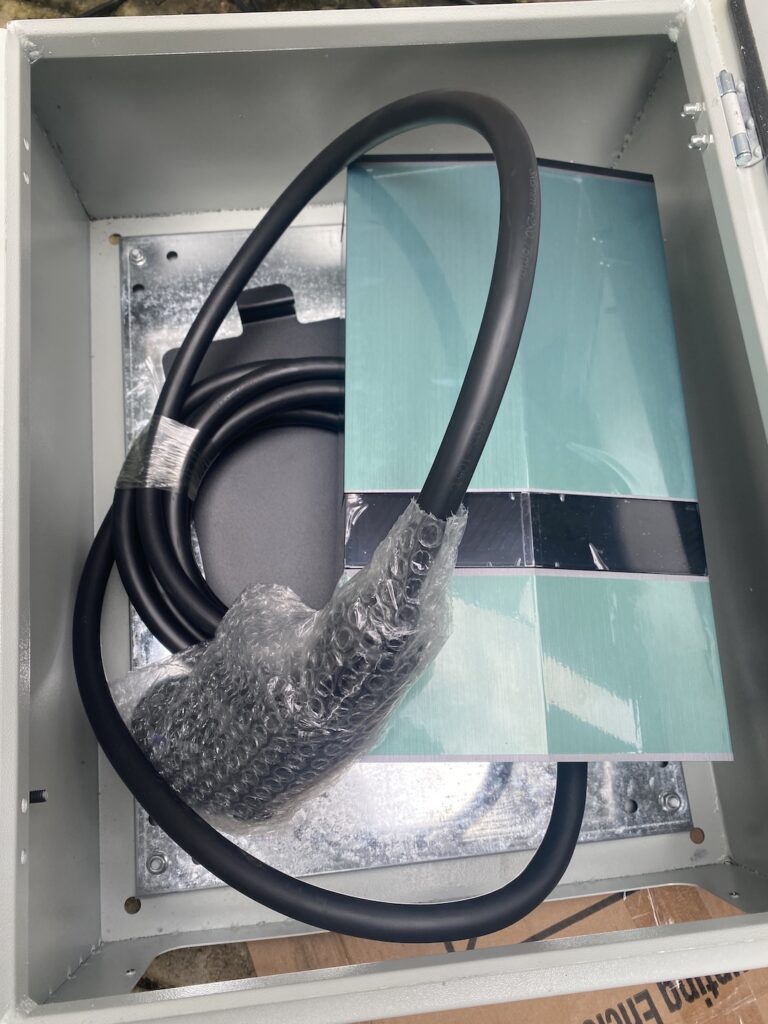
A fixed charger at home solves one problem. It does not help you in Kaduna, at a hotel in Wuse, or at your mother’s house in Gwarinpa on a Sunday. A portable charger goes in the boot and turns any suitable outlet into a charging point, which is what makes long journeys in Nigeria possible at all.
From N750,000. Open 24 hours on 0706 727 6002.
Why you still want one even with a charger on your wall
Most of our customers who own a portable charger already have a fixed one at home. The two do different jobs.
The country has very few public chargers. Nigeria had roughly a dozen public charging and battery-swap sites in mid-2025, and they are concentrated in Lagos and Abuja. Outside those two cities you are relying on whatever outlet you can reach, which means you need to carry your own charger.
Your destination has power, not a charger. Hotels, estates, offices and family compounds nearly all have electricity. Almost none of them have an EV charger. A portable unit closes that gap without asking anyone to install anything.
Long trips stop being an act of faith. Abuja to Kaduna, Jos, Lokoja or Minna is comfortable in an electric car if you can top up at the other end overnight. Without a charger in the boot, the return leg is a calculation you do not want to be making.
It is your backup. If your fixed charger faults, or you are waiting on a part, the portable unit keeps the car moving while we sort it out.
It moves with you. A wall charger belongs to the building. A portable charger belongs to you, and it comes along when you change house or change car.
What we stock
Prices are for the charger itself. Portable units generally need no installation, which is the point of them.
From N750,000
Portable EV charger
The everyday unit. Lives in the boot, plugs in wherever you are staying, and charges the car overnight at your destination.
From N950,000
Higher-capacity portable charger
For heavier daily distance and longer trips. Same convenience, more capability, and the same confirmation against your car before you pay.
Using one safely on the road
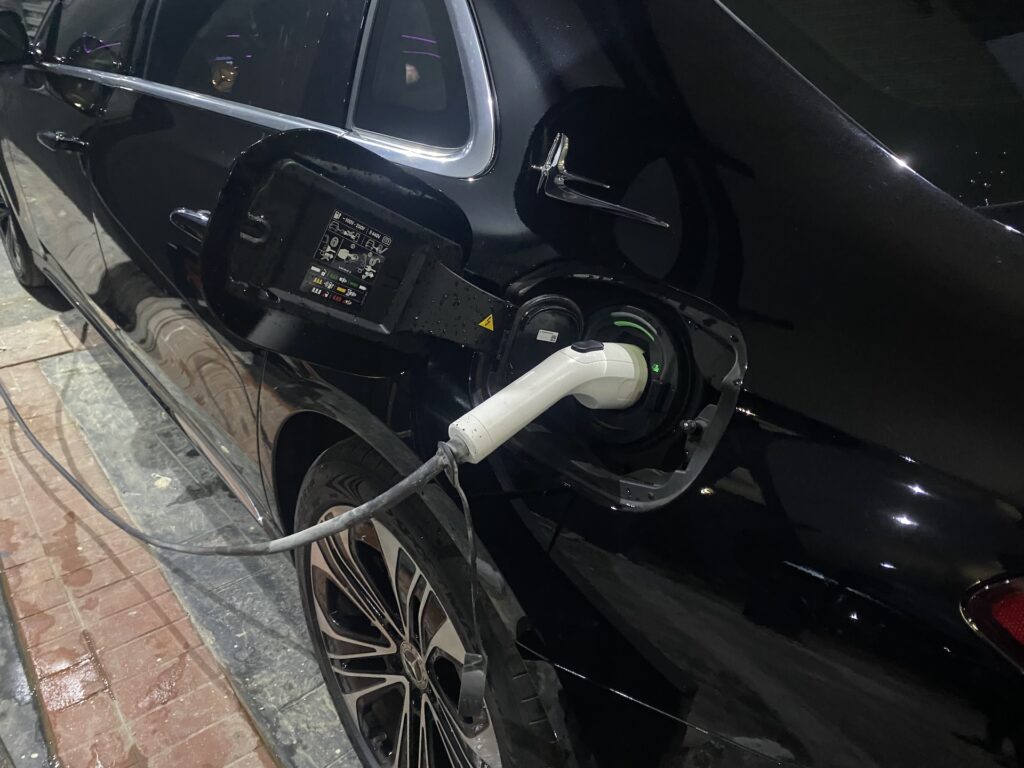
A portable charger is only as safe as the outlet you plug it into, and outlets on the road vary enormously. This is what we tell every customer who buys one.
- Plug into a socket on its own circuit wherever you can, not one shared with air conditioning or a pump
- Check the socket and plug are cool after the first thirty minutes, and stop if either is warm
- Do not use an extension lead or a multi-way adaptor, ever
- Reduce the charging current when you are unsure of the wiring, and let it take longer
- Avoid charging in standing water, and keep the connector off the ground
- On a generator, make sure it is properly earthed and can hold the load steadily
- If the supply is unstable, charge in the quiet hours rather than at peak
Straight answer
Portable or fixed? Usually both
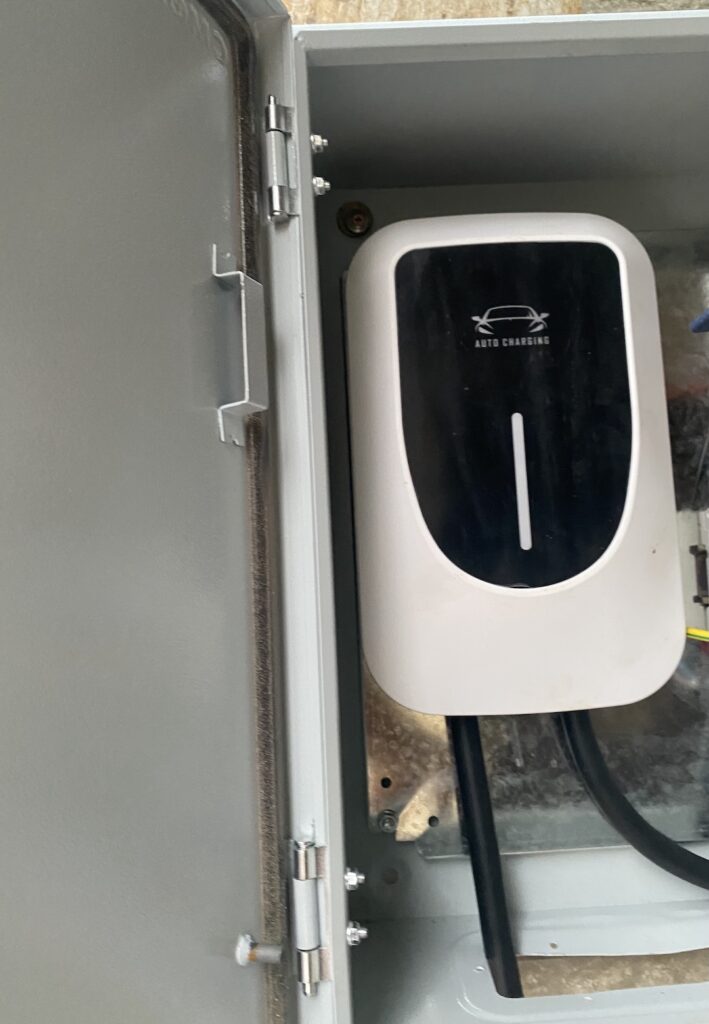
A fixed wall charger is what you want at home. It is faster, it is on a dedicated circuit with proper protection, it is weatherproof, and you never think about it. It is the difference between charging being a chore and charging being invisible.
A portable charger is what you want everywhere else. It is slower, and that is fine, because the car is parked overnight anyway. What it buys you is range of destinations rather than range of kilometres.
If you can only have one and you never leave Abuja, fit the wall charger. If you travel, get both. We are not going to pretend the portable unit replaces a proper installation, because it does not.
See what a fixed home installation involves, or what drives the installation cost.
What our customers say
Rated 5.0 out of 5 from 3 Google reviews. Read every one of them, unedited, on our Google Business Profile.
“Great service and fast response I will give you guys a 9/10.”
Finding the charger: very easy
Kekeboro Obarijima · Google review
“Had a smooth charging experience at this Abuja EV charger installation, very user friendly. The fast electric vehicle charging and reliable public EV power make it the best spot in the FCT. Will definitely be back.”
john mmoh · Google review
“Great service.”
HID ACADEMY · Google review
Portable charger questions
Not covered here? Ask on the phone. It is quicker than guessing.
Slower than a fixed 7.4kW wall unit, which is why it suits overnight charging at a destination rather than a quick top-up. In practice you plug in when you arrive and the car is ready in the morning. For daily use at home, a fixed charger is the better tool.
Any sound socket on a circuit that can carry the load for several hours. What you must not do is use an extension lead or a multi-way adaptor, or plug into a socket already sharing a circuit with an air conditioner or a pump. If the plug or socket gets warm, stop.
Usually, with the hotel’s permission, and it is worth asking at booking rather than at check-in. Many Abuja and Kaduna hotels are happy to let a guest charge overnight from a suitable outlet in the car park or a ground-floor room.
It can be done, if the generator is properly earthed and can hold the load steadily. Charging from diesel is expensive at current prices, so treat it as a way of finishing a journey rather than a routine.
If you drive daily, yes. The portable unit is for travel and for backup. A fixed charger on a dedicated circuit is faster, safer for repeated use, and does not tie up a socket for eight hours every night.
Yes, the manufacturer’s warranty on the unit. Keep the carry case and the paperwork.
Tell us your car and roughly how far you drive, and we will say. If the entry unit is enough for you we will tell you that rather than sell you the more expensive one.
Call 0706 727 6002 or send a WhatsApp message and we will tell you what is in stock today and how quickly it can reach you anywhere in the FCT.
Some are. Portable units come in different ratings, and the faster ones need a suitable outlet at the other end to deliver their full output. That is the practical limit on the road: the charger may be capable, but the socket you find may not be. We will tell you what each unit needs before you buy it.
Get one in the boot before your next trip
Tell us what you drive and where you are going. We will confirm which unit suits you, what it costs, and how quickly we can get it to you.
On site for inspection within 6 hours, anywhere in the FCT. Open 24 hours, seven days a week.